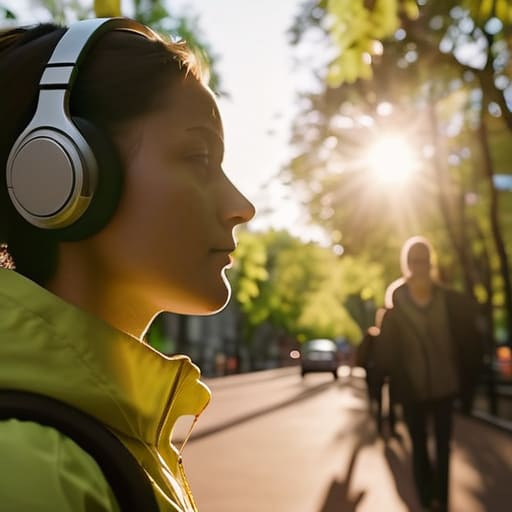
I was halfway through a particularly intense synthwave track, completely lost in the rhythm, when a rogue golden retriever decided my shins were the perfect place to park itself. I didn’t even hear the owner calling out or the frantic jingling of a leash; I was just gone. It was a jarring, slightly embarrassing reminder that walking with headphones isn’t just about the audio quality or how much you spent on your noise-canceling buds—it’s about navigating the thin line between your own private sanctuary and the unpredictable chaos of the real world.
Look, I’m not here to give you a lecture on “situational awareness” or sell you some overpriced, high-tech gear that promises to change your life. I’ve made enough mistakes—from nearly walking into traffic to missing a neighbor’s friendly wave—to know what actually works. Instead, I’m going to share the real-world tactics I use to stay immersed in my music without becoming a total hazard. We’re going to talk about finding that sweet spot where you can actually enjoy your soundtrack while still keeping your eyes (and ears) peeled for whatever the sidewalk throws at you next.
Table of Contents
Podcast vs Music for Walking Choosing Your Mental Rhythm

This is where the real debate happens. For me, it all depends on the vibe of the stroll. If I’m trying to crush a power walk or hit a specific cadence, music is the undisputed king. There’s a direct link between auditory stimulation and walking pace; a heavy bassline or a high-BPM techno track can practically force your legs to move faster without you even realizing it. It turns a mundane loop around the block into a focused workout session.
Of course, none of this matters if your gear is constantly slipping or digging into your ears mid-stride. There is nothing that kills a good flow quite like having to stop every five minutes to readjust your earbuds. I’ve found that investing in some decent stfitting gear makes a massive difference, especially when you’re trying to really zone out during a long trek. It’s one of those small upgrades that honestly turns a distracting chore into a seamless experience.
On the flip side, if I’m just out to clear my head or decompress after a long day of staring at screens, I’ll swap the playlist for a long-form podcast. It turns a solo trek into a sort of intellectual deep dive, making the time fly by while I learn something new. However, I’ve learned the hard way that losing myself in a gripping true crime story can be a bit risky. To keep my ambient sound awareness intact, I usually opt for something with a “transparency mode” or even look into bone conduction technology benefits to ensure I can still hear the world around me.
Auditory Stimulation and Walking Pace Syncing Sound to Step
There is a weirdly satisfying phenomenon that happens when your stride finally hits the same BPM as your playlist. It’s like your body stops thinking about the effort and just becomes the rhythm. I’ve noticed that if I’m feeling sluggish, cranking up a high-tempo techno track can actually force my legs to move faster without me even realizing it. This connection between auditory stimulation and walking pace is real; the right beat acts like a metronome for your muscles, turning a mindless stroll into a focused power walk.
However, there’s a fine line between finding your flow and losing your grip on reality. If you’re pushing a serious pace, you don’t want to be so lost in a heavy bassline that you miss a turning car or a sudden obstacle. This is where I swear by bone conduction technology benefits. Instead of plugging your ears completely, these allow you to feel the music while maintaining crucial ambient sound awareness. It’s the perfect middle ground—you get that rhythmic drive to keep your steps steady, but you aren’t walking through the world in a total sensory vacuum.
How to Not Get Blindsided: My Golden Rules for Walking with Audio
- Don’t go full “noise-canceling” mode in busy areas. I love the silence, but being totally deaf to a car horn or a barking dog is a recipe for a bad day. Keep the transparency mode on if you can.
- Match your tempo to your mood, not just your steps. If you’re feeling sluggish, blast some high-BPM techno to force your legs to move; if you’re decompressing, switch to something lo-fi so you don’t end up overtraining.
- Watch out for “audio distraction” zones. If you’re crossing a busy intersection or navigating a crowded subway station, hit the pause button. It’s better to lose three minutes of a podcast than to walk into traffic because you were too deep in a true-crime thriller.
- Invest in bone conduction headphones if you’re a serious walker. They sit outside your ear canal, which means you can actually hear the world around you while still enjoying your playlist. It’s a total game-changer for safety.
- Use your audio as a mental boundary. If you’re walking to clear your head after a stressful meeting, use a specific “reset” playlist. It trains your brain to recognize that once the music starts, the work day is officially over.
The Quick Cheat Sheet
Match your audio to your movement—blast high-tempo playlists when you’re pushing the pace and save the deep-dive podcasts for those slow, meditative strolls.
Don’t lose touch with the world around you; keep the volume at a level where you can still hear a car horn or a cyclist coming up behind you.
Use your walks as a mental reset by intentionally choosing between “active listening” to learn something new or “passive listening” to just zone out.
## The Sound of Solitude
“There’s a specific kind of magic that happens when you slip those headphones on; the world doesn’t just get quieter, it gets intentional. Suddenly, you aren’t just a person walking down a street—you’re the protagonist of your own private movie, moving to a rhythm only you can hear.”
Writer
The Final Step

At the end of the day, walking with headphones isn’t just about passing the time; it’s about curating your environment. Whether you’re leaning into a heavy bassline to crush your mile or letting a long-form podcast turn a simple stroll into a deep dive of knowledge, you are essentially choosing the texture of your reality. We’ve looked at how the right rhythm can physically shift your pace and how the choice between lyrics and spoken word dictates your mental headspace. Just remember that the goal isn’t to drown out the world entirely, but to find that perfect sonic balance that makes every step feel intentional rather than just a way to get from A to B.
So, grab your gear, check your battery levels, and get out there. There is something almost magical about that moment when your favorite track hits just as you step out the front door, turning a mundane sidewalk into a personal stage or a quiet path into a sanctuary. Don’t just walk to reach a destination; walk to feel alive in the headspace you’ve built for yourself. Your next great idea, your best mood boost, or your most peaceful moment is likely just one playlist away.
Frequently Asked Questions
Is it actually safer to use bone conduction headphones instead of traditional earbuds?
Look, if you’re someone who constantly feels like they’re living in a bubble, bone conduction is a total game-changer. Unlike earbuds that plug your ears and basically mute the world, these sit on your cheekbones. They leave your ear canals wide open, so you can actually hear a car horn or someone shouting your name while your playlist is still pumping. It’s easily the safest way to stay tuned in without sacrificing your soundtrack.
How do I stop my music from becoming a distraction when I'm trying to focus on my surroundings?
The trick is to stop treating your playlist like a movie soundtrack and start using it as background texture. If the lyrics are too catchy, your brain will prioritize them over the real world every single time. Switch to lo-fi beats, ambient instrumentals, or even just a steady drone. You want something that occupies that restless part of your mind without demanding your full attention, letting you stay present while still enjoying the vibe.
Are there specific types of audio, like binaural beats, that actually help with walking meditation?
Oh, for sure. If you’re trying to turn a stroll into a moving meditation, binaural beats are a total game-changer. They work by playing slightly different frequencies in each ear, which basically nudges your brain into those deeper, calmer states like alpha or theta waves. Beyond that, I’m a huge fan of ambient nature soundscapes—think heavy rain or forest birds. They strip away the urban noise and help you actually drop into your body.